TL;DR: A Seville hospital team published a plan on November 25, 2026 to test a smartphone app and clinician dashboard for monitoring CAR T-cell and bispecific antibody patients at home, but the paper reports no results and limits enrollment to adults with a trained round-the-clock caregiver who live within two hours of the hospital.
Patients receiving engineered immune-cell therapies need close watching for serious inflammatory and neurological reactions, and cancer centers are testing whether part of that surveillance can move into the home. A new design comes from University Hospital Virgen del Rocío in Seville, Spain, where researchers published the CONTigo protocol in Frontiers in Digital Health on November 25, 2026. María Antonia Pérez Moreno of the hospital's pharmacy department is the corresponding author.
The paper is a blueprint, not a product announcement: it reports no outcomes and no availability date for patients.
What the Seville team plans to test
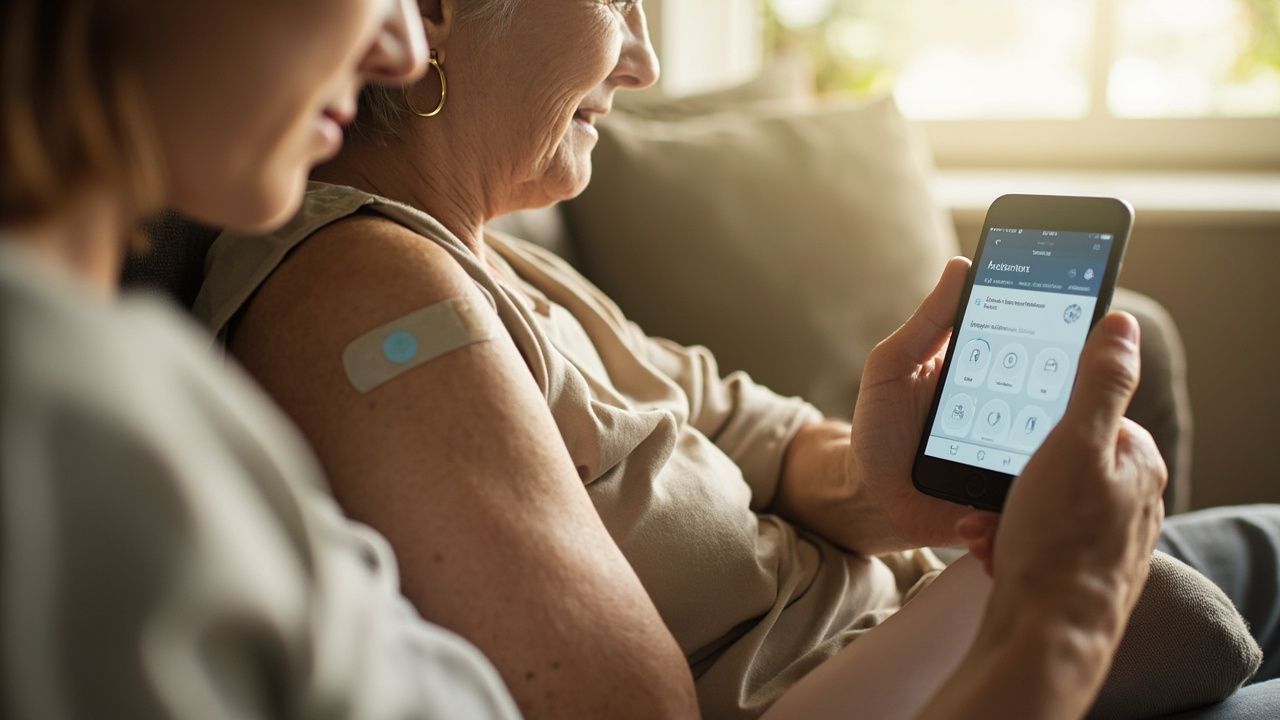
CONTigo has two halves: a mobile app for patients and caregivers, and a professional web platform with management and clinical tools for the care team. The research is designed as a prospective, single-center pilot that combines implementation and effectiveness questions.
Work proceeds in three stages: Delphi-based development of risk algorithms, user-centered design and platform development, and a real-world pilot.
Feasibility and clinical safety make up the primary outcome. Investigators will assess how closely alerts from the app agree with adverse events later confirmed in the clinic, and how long it takes to intervene after an alert. Usability, health care utilization, and early detection of severe toxicities are secondary outcomes.
The authors write that remote monitoring could catch adverse events sooner, improve communication between patients and clinicians, and make outpatient management safer. The pilot is designed to test those possibilities.
Who would qualify for home monitoring
Participants must be adults with a hematologic malignancy receiving one of these therapies, with an ECOG performance status of 2 or lower, preserved organ and cognitive function, low tumor burden, and clinical stability.
The protocol also sets geographic and caregiving conditions. Patients must live within two hours of the hospital, be able to travel, and have a caregiver on hand at all times who has been trained to use the app. People who cannot use the application are excluded, as are people taking part in a clinical trial.
Why cancer centers are moving monitoring home
These therapies can cause cytokine release syndrome and immune effector cell-associated neurotoxicity syndrome. A 2025 feasibility study in Frontiers in Immunology led by Susan L. Moore noted that 37% to 93% of CAR T recipients develop some degree of cytokine release syndrome and 20% to 60% develop neurotoxicity.
Fever remains the sentinel sign of cytokine release syndrome, which makes temperature a logical entry point for remote monitoring. A September 25, 2026 review, "There's No Place Like Home," by Julian Guetta-Weiss and Chenyu Lin for the American Society for Transplantation and Cellular Therapy points to FDA-cleared wearable temperature sensors, including disposable skin patches such as TempTraq that measure body temperature every six minutes. The authors state that the piece reflects their own views, not necessarily the society's.
Some platforms add more signals. One pairs a temperature patch with remote photoplethysmography, which uses the patient's smartphone camera to scan the face and estimate pulse, breathing rate, blood pressure, and heart-rate variability. Readings can reach a cloud dashboard that flags clinicians when thresholds are crossed.
Symptom reporting captures what devices cannot. Fatigue, confusion, difficulty finding words, and declining function are better reported by patients or families, and neurotoxicity may begin with subtle cognitive shifts that a relative notices first. Electronic patient-reported outcome tools let people log symptoms in an app or web portal, sometimes prompting triage without a visit.
Continuous data may also change the timing of care. The ASTCT review notes that a steady stream of readings can reveal temperature trends between intermittent checks, potentially allowing earlier treatment, and that remote monitoring can support earlier discharge and outpatient models needing less on-site observation. Automated alerts can also reduce manual temperature-taking, easing the load on patients and caregivers.
The evidence base is still early
The ASTCT authors describe several gaps. Evidence specific to immune effector therapies is in its early stages, published interventional trials in CAR T and T-cell engager populations remain limited, and most current programs are feasibility or workflow studies. Many centers adapt general oncology symptom platforms rather than CAR T-specific tools such as encephalopathy scoring, and standardized thresholds and escalation pathways are still being developed.
The Seville paper describes a planned single-center pilot and cannot yet show whether app-based monitoring prevents severe toxicity or shortens hospital stays.
What an established U.S. program does
Vanderbilt University Medical Center in Nashville, Tennessee, offers one example of the staffing behind remote monitoring. Its advanced practice provider-led outpatient cellular therapy program, developed in 2019, initially required a dedicated caregiver and secure local lodging within 30 miles of the hospital for 30 days after infusion. Patients came to clinic twice daily, had vital signs recorded at home every four hours, checked in by telehealth at 10 p.m., and received a 6 a.m. call reviewing the night. Providers answered a dedicated phone line around the clock.
As volume grew, the team added continuous at-home remote monitoring, according to its report in the November/December 2026 issue of JADPRO. The authors describe the workflow as a possible template for other centers and say outpatient monitoring has helped alleviate some of the financial burden of these treatments.
The ASTCT review describes the overnight layer as typically handled by a centralized 24/7 virtual nursing service, usually a third-party vendor serving multiple cancer centers, which triages alerts and contacts patients.
What patients can take from the protocol
The Seville paper does not say when recruitment will start or when data will be reported. What it does show is the checklist hospitals apply before a patient is monitored from home: a stable clinical picture, a short trip to the cancer center, and a caregiver comfortable with the technology.
Patients can ask any center offering home monitoring which readings or symptoms trigger an alert, who responds overnight, and how quickly someone can be seen if something changes.